A Practical Guide to Granulator Blade Types, Materials and Selection
Posted on
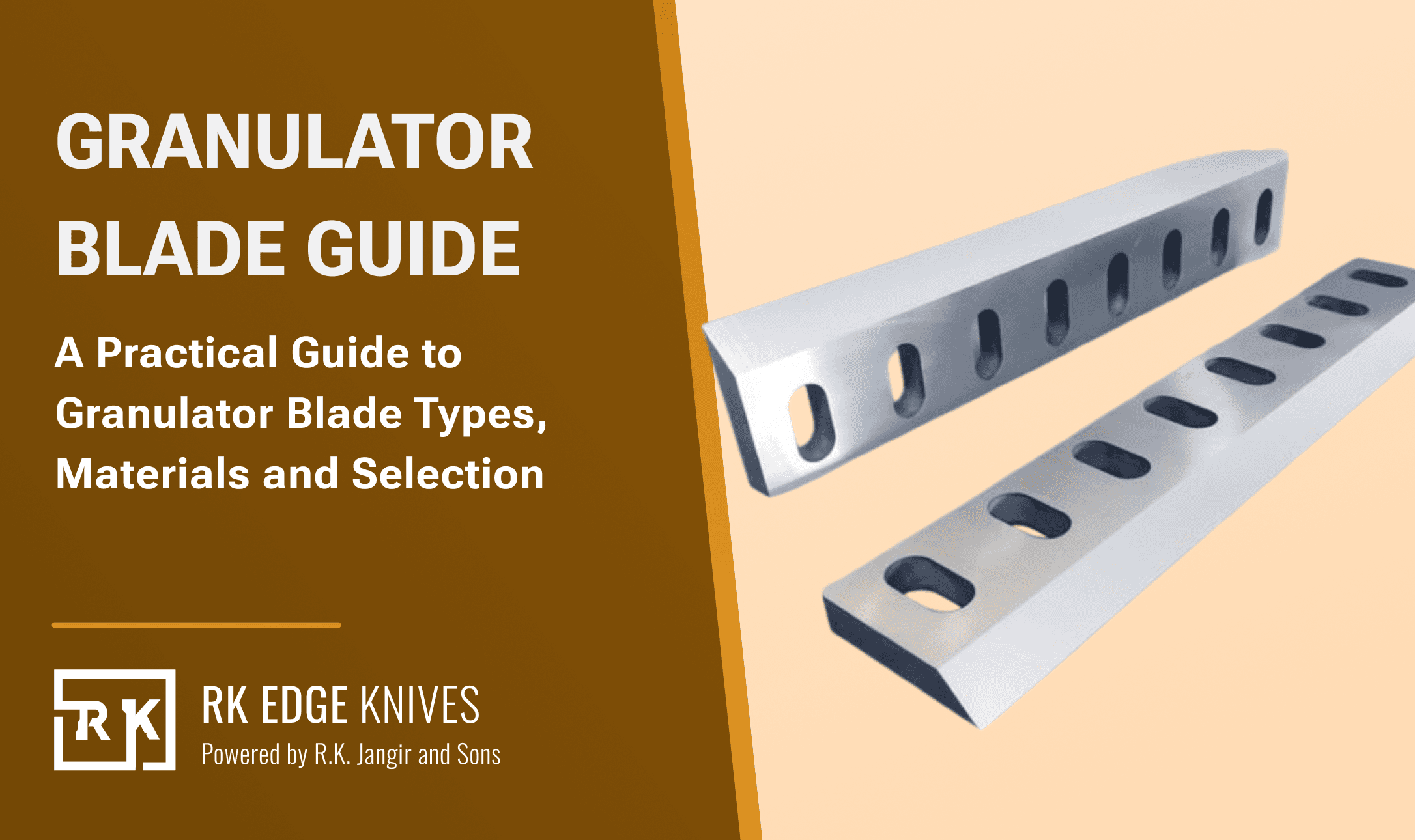
Selecting the right granulator blade is not just a purchasing decision — it is an engineering decision that directly affects production efficiency, granule quality, machine health, and total operational cost. Understanding blade types, materials, and selection criteria is the foundation of a high-performing granulation process.
This guide breaks down everything you need to know to make the right granulator blade choice for your specific application.
Understanding Granulator Blade Types
Granulators operate on a precise cutting principle involving two primary blade types working in combination.
Rotor Blades (Rotating Blades) — Mounted on the central rotating shaft, rotor blades provide the primary cutting force. Spinning at high speeds, they shear material against the stationary blades. Their design — including hook angle, length, and thickness — is tailored to the material being processed. Rotor blade selection directly determines cutting efficiency and granule size.
Stator Blades (Fixed Bed Blades) — Fixed securely in the granulator housing, stator blades provide the counter-cutting edge against which rotor blades shear the material. The adjustable gap between rotor and stator blades is critical — it determines final particle size and cutting cleanliness.
Specialised Blade Designs
Beyond standard straight blades, specialised designs address specific processing challenges.
Scissor-Cut or Hooked Blades — Feature an angled hook that grips and cleanly slices flexible materials like film and fibers, preventing wrapping around the rotor.
Staggered Rotor Configurations — Blades arranged in a helical or staggered pattern deliver smoother operation, reduced vibration, and better feeding of bulky or irregular items.
Choosing the correct blade type is fundamental — a film granulation blade will struggle with rigid purgings, just as a straight blade may cause tangling with soft or flexible materials.
Blade Materials — From D2 Tool Steel to Solid Carbide
The blade's core material is the ultimate determinant of service life, edge retention, and cost-effectiveness. Selecting based solely on upfront price is a shortcut to higher total cost of ownership.
D2 Tool Steel — The industry standard for most plastic granulation. Excellent balance of wear resistance and toughness, resharpened multiple times, delivering 3–5x longer life than basic carbon steels.
High-Speed Steel (HSS) — Retains cutting edge at elevated temperatures. Ideal for continuous, high-throughput operations where heat buildup degrades standard tool steel.
Tungsten Carbide Tipped (TCT) — Carbide tips bonded onto a tough steel body. Delivers up to 8x the edge life of standard tool steel. Best for fiberglass, mineral-filled, and mixed waste materials.
Solid Tungsten Carbide — Maximum wear resistance for the most demanding applications. Highest initial investment but lowest cost-per-hour where justified.
Material Grade | Hardness (HRC) | Best For |
|---|---|---|
D2 Tool Steel | 58–62 | General plastic granulation — PP, PE, ABS, PS |
High-Speed Steel (HSS) | 60–65 | High-throughput, high-heat operations |
Tungsten Carbide Tipped | HRA 90+ | Abrasive filled materials, mixed waste streams |
Solid Tungsten Carbide | HRA 92+ | Ultra-abrasive composites, pharmaceutical regrind |
Granulator Blade Selection Checklist
Use this practical checklist when specifying your next set of granulator blades:
Material Being Processed — Is it clean PP film, glass-filled nylon, PVC pipes, or mixed post-consumer waste? Abrasiveness, toughness, and flexibility all dictate the right blade material and design.
Machine Make and Model — Blades are engineered for specific granulator models. Always provide the exact machine make, model, and serial number to ensure perfect dimensional fit and rotor compatibility.
Desired Output Size — The gap between rotor and stator blades directly controls granule size. Confirm your blade and machine setup can achieve your target particle distribution.
Production Volume and Duty Cycle — Is it a 24/7 continuous operation or batch processing? High-volume runs justify investment in premium materials like HSS or carbide for lower long-term total cost of ownership.
Total Cost of Ownership — Calculate cost per kilogram processed, not just blade price. A blade that costs 50% more but lasts 300% longer significantly reduces downtime, labor, and overall operational cost.
Maximizing Granulator Blade Life — Best Practices
Even the best blades require proper care to deliver their full service life potential.
Sharpening Schedule — Sharpen before blades become completely dull. Regular resharpening restores cutting geometry and maintains consistent granule quality.
Precision Installation — Use a calibrated torque wrench. Incorrect bolt torque is a leading cause of premature blade failure and rotor damage.
Regular Inspection — Check for nicks, uneven wear, and material buildup. Clean the machine between different material runs to prevent contamination.
Monitor Machine Health — Increased vibration or higher power draw signals blade wear before serious damage occurs.
Proper Blade Storage — Store spare blades in a dry, clean environment with a light coat of anti-corrosive oil applied to prevent rust between uses.
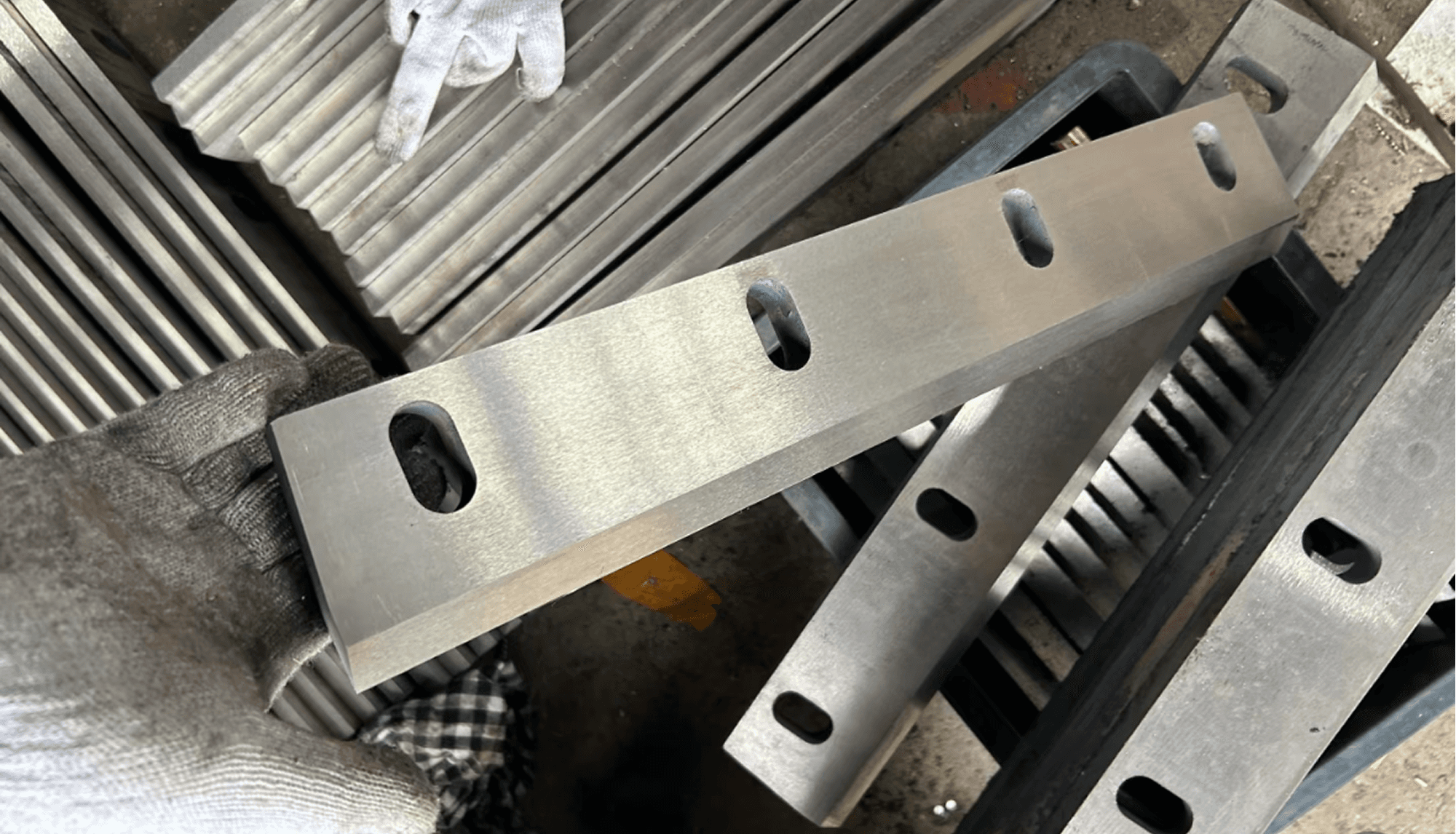
How Blade Selection Affects Total Cost of Ownership
The right granulator blade is not a cost — it is an investment. Dull or incorrectly specified blades increase energy consumption by 15–25% per cycle, accelerate machine wear, and produce inconsistent granule quality that affects downstream processes. The correct blade maintains efficiency, extends machine life, and reduces unplanned downtime — delivering measurable savings across every ton processed.
RK Edge Knives manufactures precision granulator blades using premium tool steels, advanced heat treatment, and CNC precision grinding — tailored to your machine, material, and production goals.
Conclusion
The right granulator blade transforms a routine consumable into a strategic production asset. Match blade type and material to your application, maintain them properly, and you will reduce downtime, lower energy costs, and improve granule quality across your entire operation.
Connect with RK Edge Knives for expert guidance on granulator blade selection and precision blade manufacturing for your recycling or plastics processing needs.
Frequently Asked Questions
How do I draw Frames?
To draw a Frame, click on Layout in the Toolbar, then select Frame. Now, you can click and drag anywhere on the Canvas.
How do I add images?
To add an image, select any Frame, and either double-click on it, or go to the Fill property. In the Fill property, switch to the image icon. Here, you can upload images.
How do I add videos?
To add a video to your site, click the “Insert” button and navigate to the “Media” section. Then, drag and drop a video component onto the Canvas.
How do I add videos?
To add a video to your site, click the “Insert” button and navigate to the “Media” section. Then, drag and drop a video component onto the Canvas.